Unreal Engine Industrial IoT Visualization: The Ramboll Digital Twin Case Study
Large AEC firms increasingly want the same thing: Unreal Engine models detailed enough to double as digital twins, but light enough to open on a client's laptop without a dedicated GPU. Ramboll, the global engineering firm, ran into this exact wall with their visualization team, Ramboll Interactive — and solved it by moving delivery off local machines entirely. This is what they built, what broke before that, and where digital twin visualization is headed once live IoT data gets layered into the model.
The problem: models too heavy to share
Ramboll Interactive builds high-fidelity Unreal Engine environments for infrastructure projects, including a 70-kilometer Norwegian road model built from LiDAR scans and populated with 1.8 million individually placed trees. Models at that scale aren't hard to create with modern UE workflows. They're hard to hand to anyone outside the team that made them.
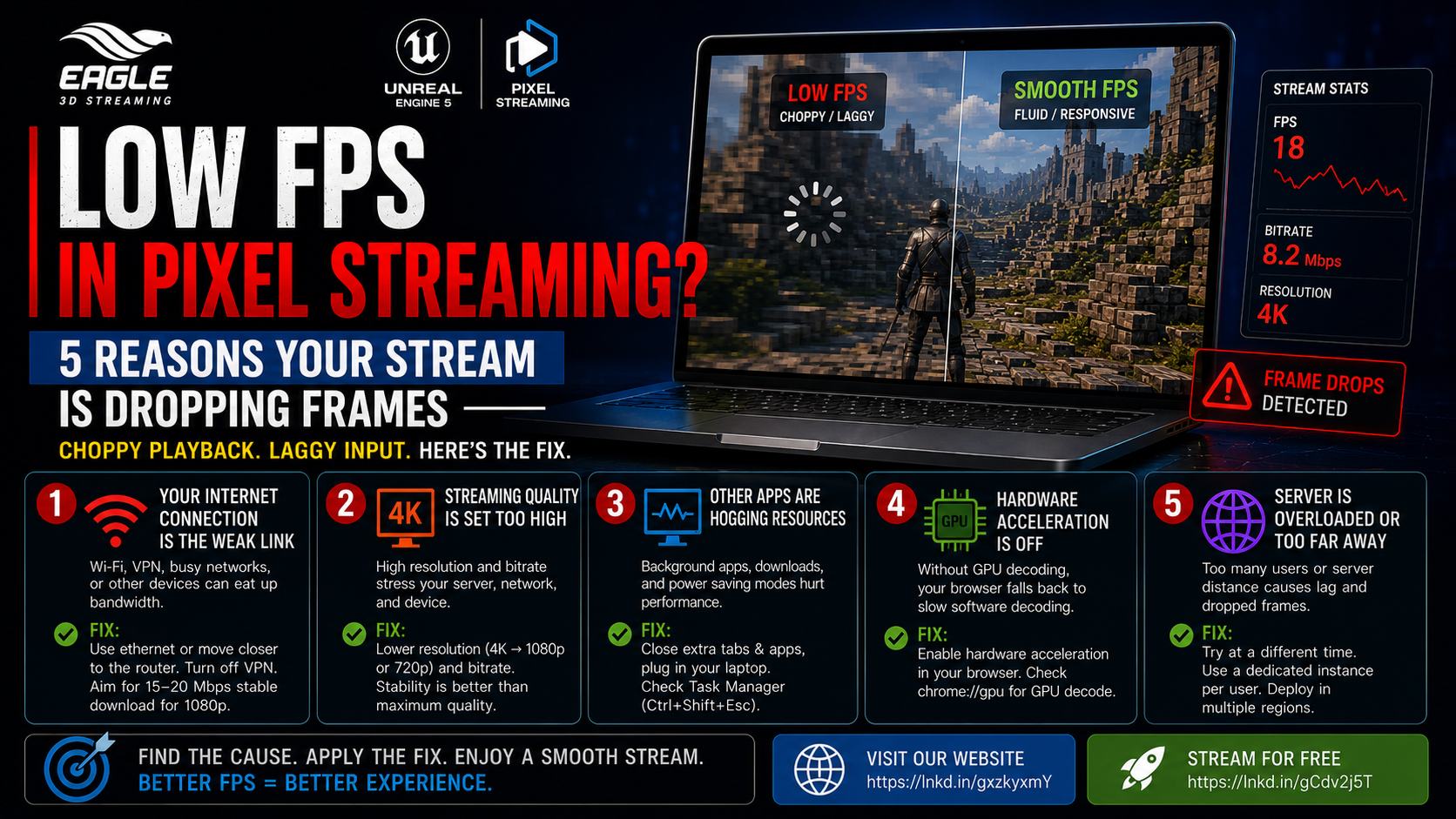
Two separate problems compounded each other. Client laptops and even most engineering workstations don't have the GPU headroom to run a model that size at usable frame rates. And the packaged executables that would normally ship the experience routinely got flagged or blocked by client IT departments before anyone could even try. The result was a visualization team producing work that clients mostly experienced as static renders and pre-rendered flythroughs, not the interactive models they'd actually built.
The fix: pixel streaming instead of local execution
Ramboll moved their Unreal Engine applications onto Eagle 3D Streaming, which runs the packaged build on cloud GPU hardware and streams the rendered output to a browser as video, with input sent back the other direction. Nothing executes on the client's machine. There's no installer to clear through IT, and no local GPU requirement, because the rendering happens entirely on E3DS's servers.
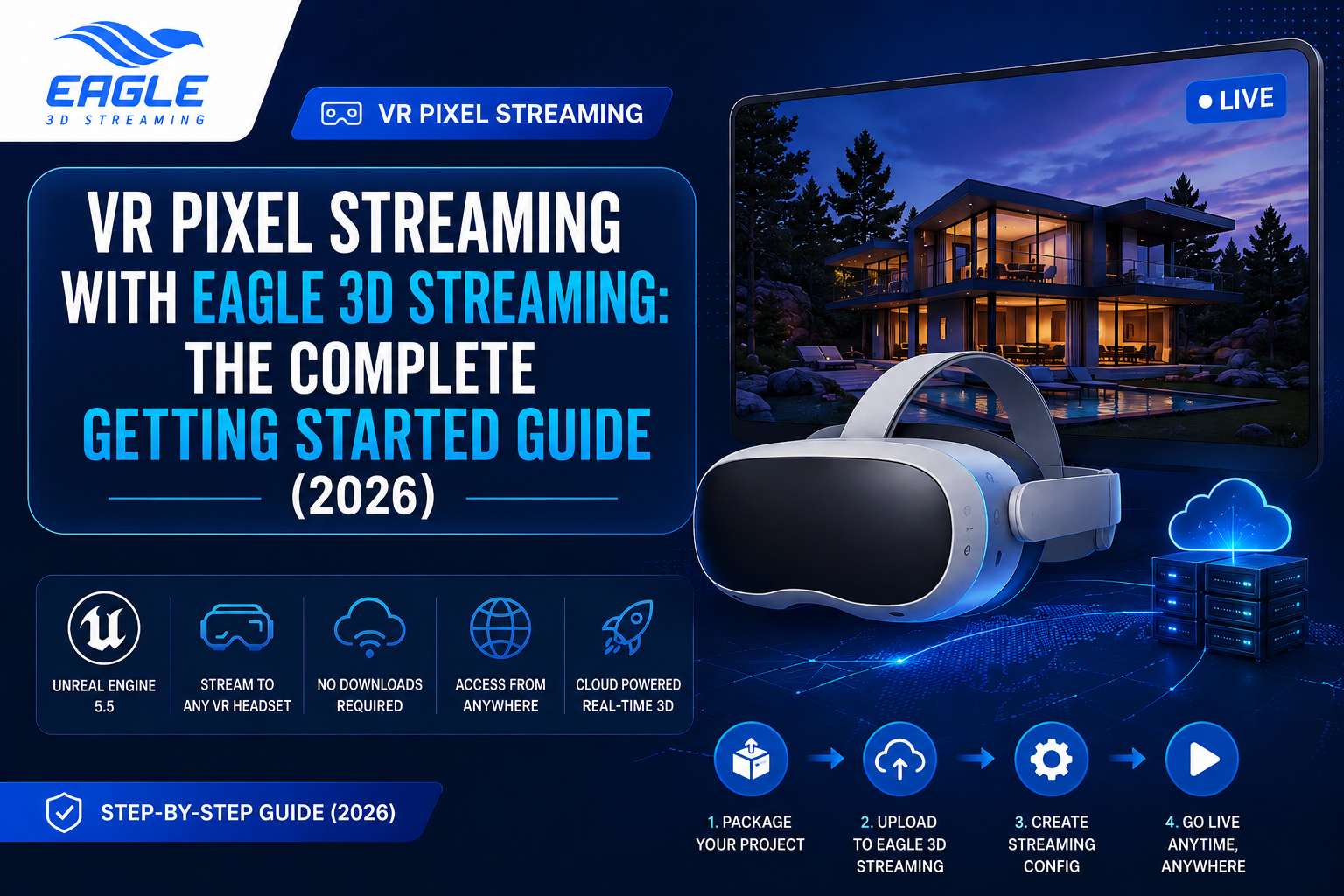
The performance difference reportedly surprised the team internally — streaming from a home connection ran smoother than the same model did natively on a visualization laptop, since the bottleneck moved from local hardware to a dedicated cloud GPU built for exactly this workload. For uploading and configuring a build like this, the process matches any other UE app on the platform: package with Pixel Streaming enabled, upload through the control panel, and generate a shareable streaming link for the finished config.
What changed for Ramboll's business, not just their tech stack
The technical fix turned into a business one fast. A few shifts stood out:
Client meetings stopped being passive. Stakeholders on projects like the Norwegian road authority's went from reviewing static images to navigating the live model themselves during the meeting, asking questions and getting immediate visual answers instead of waiting on a follow-up render.
Internal review got faster. Engineers, architects, BIM specialists, and planners could pull up the same live model from their own machines instead of waiting on file handoffs or dealing with version mismatches between local copies.
It became core to how they win work. Ramboll Interactive's lead has been direct that without a streaming delivery method, models built at this fidelity simply wouldn't reach clients, since the hardware to run them locally doesn't exist on the client side. Real-time, interactive UE delivery is now built into 70-80% of the team's production output, and has reportedly factored into winning new project work in markets like Italy and the UK.
IP stays put. Because nothing executable leaves E3DS's servers, the proprietary models, textures, and compiled project files aren't handed over the way they would be with a downloadable build. Clients get the experience without getting the asset.
From visualization to industrial IoT digital twin
The Ramboll case sits on the edge of a bigger shift: visualization models that evolve into operational digital twins. A static Unreal Engine model shows what something looks like. A digital twin shows what it's doing right now, fed by live data from the physical asset it represents — traffic sensors on a road, IoT telemetry from a piece of industrial equipment, weather data, energy consumption readings.
That kind of live data integration is a different technical problem than just rendering geometry, since the platform now has to handle a constant inbound data stream alongside the visual stream without adding latency. E3DS supports passing data into and out of a running UE app during a stream session — the upload and download files documentation covers the mechanism used to move data between a browser session and the cloud-hosted application, which is the same kind of channel that an industrial IoT feed would use to update a digital twin in real time. For teams planning ahead to this stage, the delivery layer (how the data and visuals reach the user) generally needs to be solved before the IoT integration layer, not after.
AEC and visualization studios: the broader pattern
Ramboll's situation isn't unique to one firm. Any visualization studio doing client-facing UE work runs into the same three problems eventually: clients without the hardware to run the model, executables that don't survive corporate IT, and large file sizes that make simple delivery slow. Streaming sidesteps all three by replacing the deliverable with a link instead of a file.
It also opens a service line that wasn't really viable before. Studios that previously delivered renders and flythroughs can offer live interactive walkthroughs and configurators as a standalone product, since the heavy lifting happens server-side rather than depending on whatever machine the client happens to have open.
FAQ
What is pixel streaming for AEC and digital twin visualization? It's a delivery method that runs a 3D application (an Unreal Engine project, for instance) on a cloud GPU server and streams the rendered output to a browser as interactive video. The client's device only needs to render video and send back input, not run the 3D scene itself.
How does this solve the large file size problem? Instead of sending a packaged build that needs to be downloaded and executed locally, the application runs entirely on the cloud server and the user accesses it through a link. File size, local hardware specs, and IT security policies around running executables stop being a factor.
Do I need a developer to stream an existing Unreal Engine project? No. A packaged UE build with Pixel Streaming enabled can be uploaded through the control panel and turned into a shareable link without writing additional code.
Can a streamed model receive live IoT or sensor data? Yes, data can be passed into a running streamed application during a session, which is the same kind of connection an IoT-fed digital twin would use to update in real time.
Is the underlying 3D file ever exposed to the client? No. The application runs server-side; only the rendered video stream and the interactive controls reach the browser, so the source files, textures, and compiled build stay on E3DS's infrastructure.
Getting started
If you're building UE models heavy enough to bottleneck on local hardware, or you're planning ahead toward an IoT-connected digital twin, the support portal and Discord community are both good places to talk through what your specific setup needs. For straightforward questions, support@eagle3dstreaming.com works too.